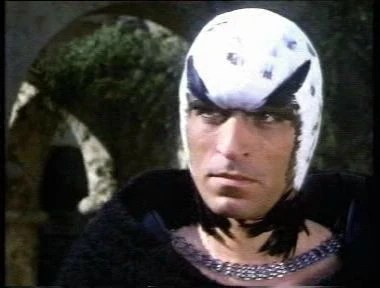
In the annals of science fiction television, few series have sparked as much debate and division among fans as “Buck Rogers in the 25th Century.” The transition from its first to its second season remains a particularly contentious point. With the introduction of the character Hawk, played by Thom Christopher, in the second season, a segment of the fan base contends that this addition significantly elevated the show’s quality. However, this perspective, while understandable given Hawk’s compelling characteristics and the depth he brought to the series, overlooks fundamental issues that rendered the second season a step back from its predecessor.
First and foremost, it’s essential to understand the context. The first season of “Buck Rogers” was characterized by its campy charm, a blend of action, humor, and a dash of cheeky innuendo, all wrapped up in the shiny foil of 1970s sci-fi aesthetics. It was a product of its time, embracing the era’s fascination with space opera and the optimism of interstellar exploration. The show wasn’t just about the adventures of its titular character, played by Gil Gerard, but about the world-building of the 25th century and its reflection of contemporary societal themes.
Enter the second season, and with it, a significant tonal shift. The production team, under new leadership, decided to take the series in a more “serious” direction, arguably to align more closely with the success of other sci-fi franchises of the time. This pivot meant not just a change in thematic focus but also in visual style, narrative structure, and character dynamics. It was within this tumultuous reimagining that Hawk was introduced—a noble warrior from a bird-like alien race, the last of his kind, with a tragic backstory and a quest for vengeance and justice.
Hawk was, without a doubt, a fascinating addition. His character brought a depth and gravitas to the series that was less prevalent in the first season. His internal conflict, cultural heritage, and the broader themes of genocide and survival resonated with many viewers. On the surface, Hawk’s inclusion seemed like a beacon of redemption for the series, providing a richer narrative layer that some fans argue elevated the second season above its predecessor.
However, this perspective is flawed, primarily because it isolates Hawk’s character from the broader context of the season’s failings. While Hawk was a compelling character in his own right, his presence alone could not counterbalance the numerous issues that plagued the second season. The shift towards a more “serious” tone led to an imbalance, stripping away much of the charm and fun that made the first season so endearing. The attempts at deeper storytelling often felt forced and incoherent, struggling to mesh with the established universe of the series.
Moreover, the second season suffered from a lack of consistency in its storytelling and character development. The episodic nature of the series meant that the emotional and narrative depth introduced by Hawk’s character often felt isolated from the rest of the show’s elements. The ensemble cast, one of the first season’s strengths, was sidelined, reducing the dynamic interactions that had added layers to the narrative fabric of the series.
Additionally, the drastic changes in setting—from the Earth-centric stories of the first season to the more spacefaring, episodic adventures of the second—alienated fans who had become invested in the series’ original premise and characters. The charm of New Chicago and its inhabitants was replaced by a seemingly endless parade of new planets and one-dimensional characters, making the series feel disjointed and unmoored from its roots.
In conclusion, while Hawk’s character was undeniably a highlight of “Buck Rogers in the 25th Century”‘s troubled second season, his presence alone does not redeem the myriad issues that arose from the show’s drastic retooling. The decision to shift the series’ tone and direction resulted in a loss of the unique blend of humor, action, and heart that had defined its initial success. Hawk’s inclusion, although a bright spot, could not compensate for the season’s overall decline in coherence, charm, and engagement. The debate surrounding the series’ two seasons is unlikely to be resolved among fans, but it’s crucial to recognize that a single character, no matter how well-crafted, cannot singlehandedly redeem a series from its foundational missteps.
This post was written with help from ChatGPT 4.0

 Christopher Finlan