Note: Antonio McDyess is one of my favorite players that no one I know seems to know or remember, so I asked ChatGPT Deep Research to help tell the story of his rise to the cusp of superstardom. Do a YouTube search for McDyess highlights – it’s a blast.
Humble Beginnings and Early Promise
Antonio McDyess hailed from small-town Quitman, Mississippi, and quickly made a name for himself on the basketball court. After starring at the University of Alabama – where he led the Crimson Tide in both scoring and rebounding as a sophomore – McDyess entered the star-studded 1995 NBA Draft . He was selected second overall in that draft (one of the deepest of the 90s) and immediately traded from the LA Clippers to the Denver Nuggets in a draft-night deal . To put that in perspective, the only player taken ahead of him was Joe Smith, and McDyess’s draft class included future luminaries like Jerry Stackhouse, Rasheed Wallace, and high-school phenom Kevin Garnett . From day one, it was clear Denver had landed a budding star.
McDyess wasted little time in validating the hype. As a rookie in 1995-96, the 6’9” forward (affectionately nicknamed “Dice”) earned All-Rookie First Team honors , immediately showcasing his talent on a struggling Nuggets squad. By his second season, despite Denver’s woes, McDyess was averaging 18.3 points and 7.3 rebounds per game , often the lone bright spot on a team that won just 21 games. His blend of size, explosive athleticism, and effort made him a fan favorite. Nuggets supporters could “see the future through McDyess” and believed it could only get better . He was the franchise’s great hope – a humble, hardworking Southern kid with sky-high potential – and he carried those expectations with quiet determination.
High-Flying Star on the Rise
McDyess’s game was pure electricity. He was an elite leaper who seemed to play above the rim on every possession, throwing down thunderous dunks that brought crowds to their feet . In fact, it took only a few preseason games for observers to start comparing him to a young Shawn Kemp – except with a better jump shot . That was the kind of rarefied talent McDyess possessed: the power and ferocity of a dunk-contest legend, combined with a soft mid-range touch that made him a matchup nightmare. “He’s showing the talent and skills that made him a premier player,” Suns GM Bryan Colangelo raved during McDyess’s early career, “There’s so much upside to his game that he can only get better.”
After two productive seasons in Denver, McDyess was traded to the Phoenix Suns in 1997, and there his star continued to ascend. Teaming with an elite point guard in Jason Kidd, the 23-year-old McDyess thrived. He averaged 15.1 points (on a phenomenal 53.6% shooting) along with 7.6 rebounds in 1997-98, and he only improved as the season went on . With “Dice” patrolling the paint and finishing fast breaks, the Suns won 56 games that year – a remarkable turnaround that had fans in Phoenix dreaming of a new era. McDyess was wildly athletic and electric, the perfect running mate for Kidd in an up-tempo offense . At just 23, he was already being looked at as a future superstar who could carry a franchise.
That rising-star status was cemented during the summer of 1998. McDyess became one of the hottest targets in free agency, courted by multiple teams despite the NBA’s lockout delaying the offseason. In a now-legendary saga, McDyess initially agreed to return to Denver, but had second thoughts when Phoenix pushed to re-sign him. The situation turned into something of a sports soap opera: Jason Kidd and two Suns teammates actually chartered a plane and flew through a blizzard to Denver in a last-ditch effort to persuade McDyess to stay in Phoenix . (They were so desperate to keep him that they literally showed up at McNichols Arena in the snow!) Nuggets management caught wind of this and made sure Kidd’s crew never got to meet with McDyess – even enlisting hockey legend Patrick Roy to charm the young forward with a signed goalie stick . In the end, McDyess decided to stick with Denver, a testament to how much the franchise – and its city – meant to him. The entire episode, however, underscored a key point: McDyess was so coveted that All-Star players were willing to move heaven and earth to recruit him.
Back in Denver for the lockout-shortened 1999 season, McDyess validated all that frenzy by erupting with the best basketball of his life. Freed to be the focal point, he posted a jaw-dropping 21.2 points and 10.7 rebounds per game that year . To put that in context, he became one of only three Nuggets players in history to average 20+ points and 10+ rebounds over a season (joining franchise legends Dan Issel and George McGinnis) . At just 24 years old, McDyess earned All-NBA Third Team honors in 1999 , officially marking him as one of the league’s elite forwards. He was no longer just “promising” – he was arriving. Denver fans, long starved for success, finally had a young cornerstone to rally around. As one local writer later remembered, “McDyess was giving Nuggets fans hope for the future” during those late ’90s seasons. Every night brought a new display of his blossoming skill: a high-flying alley-oop slam, a soaring rebound in traffic, a fast-break finish punctuated by a rim-rattling dunk. The NBA took notice that this humble kid from Mississippi had become a nightly double-double machine and a highlight waiting to happen.
Peak of His Powers
By the 2000-01 season, Antonio McDyess was widely regarded as one of the best power forwards in the game. In an era stacked with superstar big men – Tim Duncan, Kevin Garnett, Chris Webber, and others – McDyess had firmly earned his place in that conversation. He led the Nuggets with 20.8 points and 12.1 rebounds per game in 2000-01 , becoming just the third Denver player ever to average 20-and-10 for a full season . That year he was rewarded with his first and only NBA All-Star selection , a recognition that Nuggets fans felt was overdue. On a national stage, the 26-year-old McDyess rubbed shoulders with the league’s greats, validating that he truly belonged among them.
Beyond the numbers, what made McDyess special was how he played the game. He was an “old-school” power forward with new-age athleticism. One moment he’d muscle through a defender in the post for a put-back dunk; the next he’d step out and coolly knock down a 15-foot jumper. On defense, he held his own as well – blocking shots, controlling the glass, and using his quickness to guard multiple positions. In fact, McDyess was selected to represent the United States in the 2000 Sydney Olympics, where he earned a gold medal and even hit a game-winner during the tournament . Winning Olympic gold was both a personal triumph and another affirmation that he was among basketball’s elite. As the 2000-01 NBA season went on, McDyess seemed to put it all together. He notched monster stat lines – including a career-high 46 points and 19 rebounds in one game – and routinely carried a middling Nuggets squad on his back. The team finished 40-42, their best record in six years , and while they narrowly missed the playoffs, the arrow was pointing straight up. It was easy to imagine Denver building a contender around their star forward. Antonio McDyess was on the path to superstardom, and everyone knew it.
By this point, even casual fans could recognize McDyess’s name. He wasn’t flashy off the court – a quiet, humble worker rather than a self-promoter – but on the court he was downright spectacular. Longtime Nuggets followers will tell you how McDyess’s presence made even the dark days of the late ’90s bearable. He gave them hope. As one writer later lamented, “The joy he brought Denver fans through the tough, lean ’90s was immeasurable.” In McDyess, the Nuggets saw a centerpiece to build around for the next decade. He was just entering his prime, continuing to refine his skills to match his athletic gifts, and carrying himself with a quiet confidence that inspired those around him. It truly felt like nothing could stop him.
A Cruel Twist of Fate
But sometimes in sports, fate intervenes in the unkindest way. For Antonio McDyess, that moment came just as he reached his peak. Late in the 2000-01 season – after he had been playing some of the best basketball of his life – McDyess suffered a painful knee injury, a partially dislocated kneecap . He tried to come back healthy for the next year, but the worst was yet to come. Early in the 2001-02 season, only about ten games in, disaster struck: McDyess ruptured his patellar tendon in his left knee, the kind of devastating injury that can end careers in an instant . He underwent surgery and was ruled out for the entire season . In fact, that one injury wiped away effectively two years of his prime – McDyess would miss all of 2001-02 and all of 2002-03, watching helplessly from the sidelines as the promising trajectory of his career was violently ripped away .
It’s hard to overstate just how heartbreaking this turn of events was. One month, McDyess was on top of the world – an All-Star, the face of a franchise, seemingly invincible when he took flight for a dunk. The next, he was facing the reality that he might never be the same player again. As Denver Stiffs painfully summarized, “Oh what could have been. McDyess had the makings of a long-time star in this league until a freak injury happened.” In fact, that knee injury was so catastrophic that it effectively ended not only McDyess’s superstar run but also played a part in ending coach Dan Issel’s tenure (Issel resigned amid the team’s struggles shortly after) . The basketball gods, it seemed, can be unbearably cruel.
For Nuggets fans – and NBA fans in general – McDyess’s injury was the kind of story that just breaks your heart. In the years that followed, McDyess valiantly attempted to come back. He was traded to the New York Knicks in 2002 as part of a blockbuster deal, only to re-injure the same knee in a freak accident (landing from a dunk in a preseason game) before he could ever really get started in New York . He eventually found a second life as a role player: after a brief return to Phoenix, McDyess signed with the Detroit Pistons and reinvented his game to compensate for his diminished athleticism . Instead of soaring above the rim every night, he became a savvy mid-range shooter and a reliable veteran presence, helping Detroit reach the NBA Finals in 2005.
McDyess later reinvented himself as a reliable mid-range shooter and veteran leader – a testament to his determination – but the explosive athleticism of his youth was never fully regained.
Watching McDyess in those later years was bittersweet. He was still a good player – even showing flashes of the old “Dice” brilliance on occasion – but we could only catch glimpses of what he once was . The once-explosive leaper now played below the rim, leaning on skill and experience rather than raw hops. And while he carved out a respectable lengthy career (15 seasons in the NBA) and remained, by all accounts, one of the most humble and beloved guys in the league, the superstar path that he had been on was gone forever. McDyess would never again average more than 9 points a game after his injury , a stark reminder of how swiftly fortune can turn in professional sports.
For many fans, Antonio McDyess became part of a tragic NBA fraternity – the “what if?” club. Just as we later saw with Penny Hardaway (whose Hall-of-Fame trajectory with the Orlando Magic was cut short by knee injuries in the late ’90s) or Derrick Rose (whose MVP ascent was halted by an ACL tear in 2012), McDyess’s story is one of unrealized potential. He was only 26 when his body betrayed him. We are left to imagine how high he might have soared, how many All-Star games he might have played in, or how he might have altered the balance of power in the league had he stayed healthy. Would Denver have built a contender around him? Would “Dice” have joined the pantheon of great power forwards of the 2000s? Those questions will never be answered, but the fact that we ask them at all is a testament to his talent.
In the end, Antonio McDyess’s career is remembered with a mix of admiration and melancholy. Admiration for the beast of a player he was before the injuries, and for the grace with which he handled the adversity that followed. Melancholy for the superstar we never fully got to see. As one longtime fan put it, McDyess was “as nice off the court as he was just plain nasty on the court” – a gentle soul with a ferocious game. He gave everything he had to the sport, and even when fate dealt him a cruel hand, he never lost his love for the game or his humility.
For younger or newer basketball fans who may not know his name, Antonio McDyess’s story serves as both an inspiration and a cautionary tale. At his peak, he was magnificent – a player with all the tools to be a perennial All-Star, a near-superstar whose every game was worth watching. And yet, he’s also a reminder of how fragile athletic greatness can be. One moment you’re flying high above the rim, the next moment it’s all gone. McDyess once brought limitless hope to a franchise and its fans, and though his journey took a heartbreaking turn, his early brilliance will never be forgotten.
In the echoes of those who saw him play, you’ll still hear it: Oh, what could have been . But let’s also remember what truly was – an extraordinary talent who, for a few shining years, gave us a glimpse of basketball heaven. Antonio McDyess was a star that burned bright, if only too briefly, and his rise and fall remain one of the NBA’s most poignant tales.
The debate over the NBA’s “Greatest of All Time” (GOAT) almost always comes down to Michael Jordan and LeBron James. Both players have dominated their eras and built extraordinary legacies. This report provides an in-depth comparison of Jordan and James across statistics, accolades, intangibles, and expert opinions to determine who deserves the GOAT title. Each aspect of their careers – from on-court performance to off-court impact – is analyzed before reaching a final conclusion.
All-Star and All-NBA Selections: James’ sustained elite play is evident in his 20 All-Star selections and 20 All-NBA team honors, surpassing Jordan’s 14 All-Star and 11 All-NBA selections (Michael Jordan vs. LeBron James: The key stats you need to know in the GOAT debate | Sporting News) James has made more All-NBA First Teams than any player in history, reflecting his top-tier status for an extended period. Jordan, however, led the league in notable categories more often (for example, he has 10 scoring titles vs. James’ 1, as noted).
Beyond the numbers, greatness is also defined by impact on the sport and culture. This section examines their influence off the stat sheet – including cultural impact, influence on how the game is played, leadership style, longevity, and overall legacy.
Cultural Impact: Both Jordan and James transcended basketball, but Michael Jordan became a global icon in a way no player had before. During the 1990s, Jordan’s fame exploded worldwide – he was the face of the NBA’s international growth. His Nike Air Jordan sneaker line became a cultural phenomenon, raking in billions (in 2013, Jordan Brand merchandise sold $2.25 billion, dwarfing sales of any active player’s shoes) (Could LeBron James Ever Surpass Michael Jordan’s Cultural Impact? | News, Scores, Highlights, Stats, and Rumors | Bleacher Report) “Be Like Mike” was a catchphrase, and Jordan’s celebrity, boosted by endorsements and even a Hollywood film (Space Jam), made him arguably the most recognizable athlete on the planet. LeBron James is also a cultural powerhouse – he entered the league with unprecedented hype and has built a media empire (starring in movies, leading media companies, and securing major endorsement deals). James’ shoe sales and earnings are enormous (e.g. a $1 billion lifetime Nike deal), yet Jordan’s cultural footprint is often considered larger. Even decades after his retirement, Jordan’s jersey and shoes remain fixtures in pop culture, and he consistently tops athlete popularity polls (Could LeBron James Ever Surpass Michael Jordan’s Cultural Impact? | News, Scores, Highlights, Stats, and Rumors | Bleacher Report) In summary, Jordan paved the way for the modern superstar brand, and while James has leveraged that path to become a global superstar in his own right, Jordan’s cultural legacy is still seen as the benchmark.
Influence on the Game: Jordan and James each influenced how basketball is played and how players approach the sport. Jordan’s on-court success and flair (gravity-defying dunks, scoring binges, acrobatic plays) inspired a generation of players to mimic his style. He showed that a shooting guard could dominate a league built around big men, revolutionizing training regimens and competitive mentality across the NBA. The NBA’s popularity boom in the Jordan era led to increased talent influx and even some rule changes in the early 2000s that opened the game up (making defensive hand-checking rules stricter) – a nod to the kind of offensive brilliance players like Jordan exhibited. LeBron James, meanwhile, ushered in the era of the do-everything superstar. At 6’9″ and 250+ lbs, James’ ability to handle the ball, run the offense, and guard all five positions has pushed the league further toward positionless basketball. Teams built around James had to maximize versatility and three-point shooting, influencing modern roster construction. Additionally, James has been a leader in player empowerment – his high-profile team changes (e.g. “The Decision” in 2010) and willingness to sign short contracts influenced star players league-wide to take control of their career paths and team up with other stars. Both men changed the game: Jordan by setting a new standard for individual excellence and competitive drive, and James by expanding the definition of a franchise player and demonstrating longevity and flexibility in a career.
Leadership Style: The two legends led in very different ways. Michael Jordan was a demanding, ruthless leader who pushed teammates relentlessly. He set an ultra-high competitive tone – famously not shying away from trash talk or even conflicts in practice to harden his team. One former teammate described Jordan in his prime as “crazy intense, like scary intense… it was almost an illness how hard he went at everything, including teammates” (Old School vs. New School: How Jordan’s and LeBron’s leadership styles differ | FOX Sports) If teammates did not meet his standards, Jordan would ride them mercilessly until they improved or were traded. This win-at-all-costs leadership produced results (his Bulls teammates have spoken of how his intensity prepared them for championship pressure), but it could instill fear. LeBron James, in contrast, is often characterized as a more friendly and empowering leader. He bonds with teammates off the court and tends to encourage and uplift them during games (Old School vs. New School: How Jordan’s and LeBron’s leadership styles differ | FOX Sports) Rather than instilling fear, James builds trust – acting as the on-court coach, making the right plays to involve others. He has been praised for elevating the level of his teammates and fostering a strong camaraderie. For example, James often publicly supports teammates and takes responsibility when the team struggles. Both styles have proven effective – Jordan’s approach forged a tough championship mentality in Chicago, while James’ approach has helped multiple franchises gel into title teams. Leadership style is a matter of preference: Jordan was the fiery general, James the consummate floor leader and teammate.
Longevity and Durability: When it comes to longevity, LeBron James has a clear advantage. James is now in his 20th NBA season, still performing at an All-NBA level as he nears age 40. His dedication to conditioning (investing heavily in his body and fitness) has allowed him to avoid major injuries and not slow down even at age 40 (Michael Jordan vs. LeBron James: The key stats you need to know in the GOAT debate | Sporting News) He has already played 1,500+ regular season games (and over 280 playoff games), climbing near the top of all-time lists in minutes and games played (Michael Jordan vs. LeBron James: The key stats you need to know in the GOAT debate | Sporting News) (Michael Jordan vs. LeBron James: The key stats you need to know in the GOAT debate | Sporting News) In contrast, Michael Jordan’s NBA career spanned 15 seasons (13 with the Bulls and 2 late-career seasons with the Wizards), and he retired twice (once in 1993 at age 30, and again in 1998 before a comeback in 2001). Jordan did have remarkable durability during his prime – he played all 82 games in a season multiple times and led the league in minutes played in several years. However, he also missed almost a full season with a foot injury early in his career and took a year off to pursue baseball. By not extending his career into his late 30s at an elite level (his final two seasons with Washington were at ages 38–40 but not at MVP level), Jordan ceded the longevity crown to James. Bottom line: James’ ability to sustain peak performance for two decades is unprecedented, which boosts his cumulative statistics and records, whereas Jordan’s dominance, though shorter, was arguably more concentrated (no decline during his championship years).
Overall Legacy: Legacy encompasses a mix of achievements, impact, and how future generations view these players. Michael Jordan’s legacy is often summarized in one word: “undefeated.” He set the gold standard with 6 championships in 6 tries, 6 Finals MVPs, and a global presence that made NBA basketball a worldwide sport. “His Airness” is enshrined in basketball lore; moves like the airborne switch-handed layup, the clutch Finals jumper in 1998, or even the iconic image of him holding the trophy on Father’s Day 1996 are part of NBA history. Many of today’s players grew up wanting to be like Mike, and even now, being compared to Jordan is the highest compliment. His name is effectively the measuring stick for greatness – for instance, when a player dominates, they draw Jordan comparisons. LeBron James’ legacy is still being written, but already it is monumental. He is the all-time scoring king, a four-time champion who delivered an elusive title to Cleveland, and he has the unique accomplishment of winning Finals MVP with three different franchises (Miami, Cleveland, Los Angeles). James is often praised for empowering athletes and using his platform for social causes, something Jordan was critiqued for not doing during his career (LeBron James, Michael Jordan, and Two Different Roads to Black Empowerment | GQ) (LeBron James, Michael Jordan, and Two Different Roads to Black Empowerment | GQ) Off the court, James’ founding of the “I Promise” school and outspoken advocacy have set him apart as an influential figure beyond basketball (LeBron James, Michael Jordan, and Two Different Roads to Black Empowerment | GQ) On the court, his eight straight Finals appearances and longevity-based records (points, playoff stats, etc.) leave a legacy of sustained excellence. In terms of reputation, Jordan is still frequently cited as the GOAT in popular opinion and by many former players. James, however, has closed the gap – what was once seen as an almost untouchable mantle now is a legitimate debate, testament to how extraordinary James’ career has been. Their legacies are both enduring: Jordan as the emblem of competitive greatness, and James as the prototype of the modern superstar who does it all and plays longer at a high level than anyone before him.
3. Category Breakdown
Below is a side-by-side breakdown of key categories to directly compare specific aspects of Jordan’s and James’ games:
LeBron James, by contrast, is a blend of scorer and playmaker. While he has “only” one scoring title, he has been remarkably consistent – usually around 25–30 points per game every year for over 19 years. That consistency and longevity propelled James to pass Kareem Abdul-Jabbar as the NBA’s all-time points leader. James’ scoring style is different from Jordan’s: LeBron uses his power and size to drive to the basket, excels in transition, and is a pass-first player at times. He became a respectable outside shooter later in his career, although not as feared from mid-range as Jordan was. When comparing peaks, Jordan’s scoring peak (1987–1988, ~35 ppg) is higher than LeBron’s peak (~31 ppg in 2005–2006), and Jordan’s ability to take over games as a scorer earned him the 1990s scoring crown. But James’ advantage is total volume – by playing longer and staying elite longer, he has scored more points overall than anyone in history (Michael Jordan vs. LeBron James: The key stats you need to know in the GOAT debate | Sporting News) In summary, Jordan was the more dominant pure scorer, while James is perhaps the greater accumulative scorer. If a team needed one basket in a do-or-die situation, many would choose Jordan for his proven clutch scoring skill, but if a team needed someone to carry the scoring load for an entire season or decade, James’ sustained output is equally legendary.
Defensive Prowess
Defense is a hallmark of both players’ greatness, though again with some distinctions. Michael Jordan was a ferocious defender on the perimeter. He could lock down opponents with his quickness, instincts, and tenacity. In 1988, Jordan won the NBA Defensive Player of the Year award, a rare feat for a guard (Magic Johnson on GOAT Debate: ‘LeBron is Special But Jordan is the Best’ | FOX Sports Radio) highlighting that he was the best defender in the league that year. He was selected to 9 All-Defensive Teams (all First Team) (Michael Jordan vs. LeBron James: The key stats you need to know in the GOAT debate | Sporting News) demonstrating consistent elite defense through his prime. Jordan led the NBA in steals three times and had seasons averaging over 3 steals and 1+ block per game – absurd numbers for a guard. His defensive style was aggressive and intimidating; he took on the challenge of guarding the opponent’s best wing player and often came up with game-changing steals (such as his famous strip of Karl Malone in the 1998 Finals that led to his title-clinching shot).
LeBron James, at his peak, was a more versatile defender. With a unique combination of size and athleticism, James in his prime (especially with Miami Heat in the early 2010s) could credibly guard all five positions – from quick point guards to powerful forwards. He made 6 All-Defensive Teams (5 First Team) (Michael Jordan vs. LeBron James: The key stats you need to know in the GOAT debate | Sporting News) Though James never won a DPOY award (finishing as high as second in voting in some years), he has numerous defensive highlights – perhaps none bigger than the chase-down block in Game 7 of the 2016 NBA Finals, an iconic defensive play that helped secure a championship. James excels as a help defender; his chasedown blocks in transition became a signature. In terms of metrics, both have similar career defensive ratings and impact. Jordan has a slight edge in career steals per game (2.3 vs 1.5) as noted, while James has a slight edge in blocks (0.8 vs 0.7) (Michael Jordan vs. LeBron James: The key stats you need to know in the GOAT debate | Sporting News) though both differences partly reflect their positions (guards get more steals, forwards more blocks).
In a head-to-head defensive comparison, Jordan is often credited as the better one-on-one defender due to his accolades and intensity. James’ defensive advantage is his versatility and size – he can guard bigger players that Jordan couldn’t. Both players, when locked in, could disrupt an opposing offense entirely. It’s worth noting that as James has gotten older, his defense has been more inconsistent (understandable given the mileage), whereas Jordan maintained a high defensive level through each of his championship seasons. Overall, Jordan’s resume (DPOY + 9× All-Defensive) slightly outshines James’, but James at his best was a defensive force in a different way.
Clutch Performance
Clutch gene is often a flashpoint in the GOAT debate. Michael Jordan’s clutch pedigree is nearly unmatched: he famously hit series-winning shots (the 1989 buzzer-beater vs. Cleveland, “The Shot,” and the 1998 Finals Game 6 winner vs. Utah are two of the most replayed clutch shots in history). Jordan went 6-for-6 in the Finals and was the Finals MVP each time, so he never failed to rise to the occasion in a championship series. In late-game situations, Jordan was known for his killer instinct – he wanted the last shot and usually made it. He averaged 33.4 PPG in the playoffs (the highest ever) and seemed to elevate in do-or-die moments (Michael Jordan vs. LeBron James: The key stats you need to know in the GOAT debate | Sporting News) Perhaps just as important as actual shots made, Jordan’s fear factor meant teammates and opponents believed he would deliver in crunch time – an invaluable psychological edge.
LeBron James had to battle a (somewhat unfair) early narrative that he was not clutch, but over the course of his career he has built a formidable clutch résumé as well. Statistically, James has hit plenty of buzzer-beaters and game-winners – in fact, as of a few years ago, James had more playoff buzzer-beating shots than Jordan. James has delivered historic clutch performances: for example, in Game 7 of the 2016 Finals, he recorded a 27-point triple-double and made the iconic late-game block, helping the Cavaliers overcome a 3–1 series deficit. Unlike Jordan, James’ clutch impact isn’t just scoring – he might make a great pass (like his assist to set up a game-winning three by Ray Allen in the 2013 Finals) or a defensive play (the chase-down block) in the critical moment. It’s also worth noting that James actually tends to improve his already great numbers in elimination games and the Finals. The notion that he “shrinks” in big games is a lazy narrative; in reality his postseason stats are often even better than regular season, and he’s had clutch Finals games (e.g. 41 points in back-to-back elimination games in 2016) (Michael Jordan vs. LeBron James: The key stats you need to know in the GOAT debate | Sporting News)
That said, James does have high-profile late-game misses and a few playoff series where critics felt he could have been more aggressive (like the 2011 Finals). Jordan, by contrast, never had a Finals where he wasn’t the best player. In clutch situations, many give the edge to Jordan for his perfect Finals record and iconic last shots. James has proven clutch ability as well, but his overall Finals record (4–6) shows times when even his heroics weren’t enough. Both players have delivered under pressure countless times – it’s telling that in a survey of NBA fans, 76% said they’d trust Jordan over James for a last shot (Chart: NBA Fans Pick Jordan Over James in GOAT Debate | Statista) Jordan’s mythical clutch aura remains a trump card in this category, even if by pure numbers James has been just as clutch in many scenarios.
Versatility
When comparing versatility, LeBron James stands out as one of the most versatile players ever. He is truly a Swiss-army knife on the court. Over his career, James has played every position from point guard to power forward (and even center in small lineups). He can run the offense as the primary ball-handler (he led the league in assists in 2020), score from inside and out, rebound in traffic, and defend multiple positions. By the numbers, James’ all-around impact is clear: he averages around 27–7–7 and is the only player in NBA history in the top five all-time for both points and assists. His blend of size, strength, speed, and basketball IQ allows him to fill whatever role is needed – scorer, facilitator, defender, or even coach on the floor. Few if any players match the breadth of skills James brings; for example, on any given night he might lead his team in points, rebounds, and assists.
Michael Jordan was less versatile in terms of positional play – he was a shooting guard who occasionally slid to small forward. However, within his role, Jordan was also an all-around contributor. In addition to his scoring title accolades, he averaged over 5 assists per game for his career, and in the 1989 season he even played point guard for a stretch, notching a triple-double in 10 out of 11 games during that experiment. Jordan could rebound well for his position (grabbing 6+ boards a game from the guard spot). But realistically, the Bulls usually asked Jordan to focus on scoring and perimeter defense, and he was so elite at those that he didn’t need to do everything. In contrast, James has often been his team’s primary scorer and primary playmaker and occasionally the de facto defensive anchor.
In terms of skill set, Jordan’s repertoire was specialized (scoring, on-ball defense, mid-range excellence), whereas James’ is expansive (point guard vision in a forward’s body, inside-out scoring, etc.). It’s reflected in their stat lines: James has far more triple-doubles and seasons averaging near a triple-double. Jordan’s advantage was that even without needing to do everything, he could still dominate the game; James’ advantage is that he can affect the game in any facet if scoring isn’t enough. Overall, James is the more versatile player by virtue of his size and style, while Jordan was more of a savant in the specific areas of scoring and defending. This category depends on what one values: do you favor the player who can check every box (LeBron), or the one who focused on a few boxes but arguably aced them better than anyone (Jordan)?
Durability
Durability is an area where LeBron’s case shines. James has logged an extraordinary number of minutes since joining the NBA straight out of high school in 2003. He has remained remarkably injury-free relative to the workload. Through 20 seasons, James has only had a couple of relatively short injury absences (a groin strain in 2018–19 being one of the longest). His ability to play heavy minutes (often 37+ minutes per game) every season and still perform at an MVP level is unprecedented. Even as he ages, he adapts his game to be efficient and avoid serious injury. This durability has allowed him to break longevity records – for instance, topping Kareem’s all-time scoring mark and setting records for playoff games and minutes. In the 2010s, James appeared in 8 straight NBA Finals, which means no significant injuries derailed his team’s playoff runs in that span – a testament to how reliably he was on the court.
Michael Jordan’s durability is a tale of two parts. In his early career, he did suffer a broken foot in his second season (1985–86) that caused him to miss most of that year. But after that, Jordan was an ironman: he played all 82 games in nine different seasons. During the Bulls’ championship runs, he was always available and playing heavy minutes (often leading the league in minutes played). His training and fitness were superb for his era, and he famously played through illnesses and minor injuries (e.g. the 1997 “Flu Game” in the Finals). However, Jordan’s overall career length was shorter. He retired at age 34 after his sixth title, taking essentially three full seasons off in his prime (one for baseball, two for a second retirement) before a two-year comeback at ages 38–40. While his peak durability (when active) was great, those gaps in his career mean he didn’t accumulate as many seasons at a high level as James. By the time Jordan was LeBron’s current age, he was a retired executive, not an active player competing for championships.
In short, both were durable when on the court, but LeBron’s longevity and consistency give him the edge. It’s hard to imagine any player matching 20 years of prime-level play like James has. Jordan’s durability helped him maximize a relatively shorter career – he never wore down during a title run – but James has shown he can extend his prime far longer than anyone before. This longevity not only boosts James’ stats but also means he has been in the GOAT conversation for a longer period than Jordan was as an active player.
4. Expert Opinions and Historical Context
The GOAT debate has raged among fans and experts for years, and it’s as much about personal criteria as facts. Opinions from players, coaches, and analysts help provide perspective:
Many NBA legends lean towards Michael Jordan as the GOAT. For example, Magic Johnson – himself one of the all-time greats and a competitor of Jordan – said, “LeBron is special… but Michael is the best to me because he never lost in the Finals and he averaged over 30 points a game. …When it’s all said and done… I’m going with MJ.” (Magic Johnson on GOAT Debate: ‘LeBron is Special But Jordan is the Best’ | FOX Sports Radio) Magic cites the common pro-Jordan arguments: the perfect Finals record, higher scoring average, and that unrivaled championship dominance. Likewise, countless others from Jordan’s era (Larry Bird, Charles Barkley, etc.) have on record picked Jordan as the GOAT, often referencing his competitive drive and impact on the 90s. An anonymous 2022 poll of NBA players found 58.3% voted Jordan as the GOAT, with 33% for LeBron (Michael Jordan voted as the GOAT in an anonymous player poll) indicating Jordan was still ahead in the eyes of those who played the game.
On the other hand, LeBron James has won over many converts with his longevity and all-around brilliance. Isiah Thomas (a Hall-of-Fame point guard and rival of Jordan’s) provocatively stated, “The best and most complete player I have seen in my lifetime is LeBron James… the numbers confirm what my eyes have seen in every statistical category.” (The players who are on the record saying LeBron James is the GOAT | HoopsHype) Isiah emphasizes LeBron’s versatility and statistical breadth. Similarly, Allen Iverson, a superstar from the generation after Jordan, said, “As much as I love Jordan, LeBron James is the one” (The players who are on the record saying LeBron James is the GOAT | HoopsHype) signaling that even some who grew up idolizing MJ recognize LeBron’s greatness might surpass it. Younger fans and players who watched James’s entire career are often more inclined to call LeBron the GOAT, pointing to his records and the level of competition he’s faced (multiple superteams, etc.).
Analysts are split as well. Some, like ESPN’s Stephen A. Smith, have passionately argued for Jordan’s supremacy, citing his flawless Finals resume and mentality. Others, like Nick Wright or Shannon Sharpe, often champion LeBron’s case, citing his statistical GOAT case (he’ll likely retire #1 in points, top 5 in assists, top 10 in rebounds) and the fact he led teams to titles in different circumstances. Historical context is also considered: Jordan dominated the 90s when the league was smaller (fewer teams, no superteam of his own), whereas James navigated an era of player movement and three-point revolutions.
Public and player polls remain close but generally give Jordan a slight edge. A 2020 ESPN poll of fans had 73% pick Jordan over LeBron overall (and even higher percentages choosing Jordan in categories like clutch shooting and defense) (Chart: NBA Fans Pick Jordan Over James in GOAT Debate | Statista) More recently, a 2024 players poll by The Athletic found Jordan received 45.9% of votes to James’ 42.1% (NBA players poll: Who do they pick as basketball’s GOAT? MJ or LeBron?) – a narrow margin indicating how much ground James has gained in this debate. It’s frequently said that GOAT preference can split along generational lines, with those who saw Jordan in his prime favoring MJ, and those who grew up later more awed by LeBron. Even so, there is broad agreement that these two are on a tier of their own – it’s often phrased that LeBron is the only player to seriously challenge Jordan’s GOAT status.
Ultimately, expert opinions underscore that greatness can be defined differently: Do you value peak dominance and perfection (Jordan), or all-around excellence over a long period (LeBron)? Do you put more weight on rings or on statistics? Depending on the criteria, smart basketball minds can and do come out with different answers.
5. Final Conclusion
After examining the full picture – statistics, achievements, impact, and intangibles – the question of who is the greatest basketball player of all time remains subjective. Both Michael Jordan and LeBron James present compelling GOAT resumes that few, if any, others in NBA history can match.
Michael Jordan’s Case: Jordan’s case rests on peak greatness and unblemished success. He dominated the NBA like no one else in the 1990s: 6 championships in 8 years, 6 Finals MVPs, five MVPs, and an unmatched aura of invincibility on the biggest stage. He was the ultimate scorer and a defensive stalwart, essentially without weakness in his prime. Culturally, he lifted the NBA to global heights and became the avatar of basketball excellence. To this day, being “like Mike” is the dream of every young player. Jordan set a standard of competitive fire and championship mentality that has become the stuff of legend. For those who prioritize rings, clutch performance, and a perfect Finals record, Jordan is the clear GOAT. As Magic Johnson succinctly put it, “that’s who I’m going with and it’s MJ” (Magic Johnson on GOAT Debate: ‘LeBron is Special But Jordan is the Best’ | FOX Sports Radio)
LeBron James’ Case: James’ case is built on longevity, versatility, and record-breaking accomplishments. Over 20 seasons, LeBron has essentially re-written the NBA record books – becoming the all-time leading scorer (Michael Jordan vs. LeBron James: The key stats you need to know in the GOAT debate | Sporting News) accumulating one of the highest assist totals for a non-guard, and making 10 Finals (with 4 titles) in an era of fierce competition and player movement. He proved he could win in different contexts: superteam favorite (Miami), underdog hometown team (Cleveland, ending a 52-year championship drought with an all-time comeback), and veteran leader (Los Angeles). Statistically, James can credibly be argued as the most complete player ever – there really isn’t anything on a basketball court he hasn’t done at an elite level. His longevity also means he has compiled more combined value than anyone; in advanced metrics, he’s at or near the top in categories like total win shares and VORP (Michael Jordan vs. LeBron James: The key stats you need to know in the GOAT debate | Sporting News) Off the court, James has been a leading voice of his generation, adding to a legacy that extends beyond basketball. Those who emphasize a long prime, all-around impact, and era-adjusted achievements might lean towards James as the GOAT, seeing his career as unparalleled in breadth. As Isiah Thomas said, LeBron “passed the eye test and the numbers confirm” greatness in every area (The players who are on the record saying LeBron James is the GOAT | HoopsHype)
Verdict: Weighing everything, Michael Jordan still holds a slight edge in the GOAT debate for many observers. His combination of absolute dominance (both statistical and championship-wise) and cultural impact set a template that even LeBron’s incredible career hasn’t fully surpassed. Jordan never lost when it mattered most, and he left the sport on top. However, the margin is slimmer than ever. LeBron James has essentially achieved a 1A/1B status with Jordan – something once thought impossible – through his extraordinary longevity and completeness. It may ultimately come down to personal preference: greatness defined by peak perfection versus sustained excellence.
In conclusion, if one must be chosen, Michael Jordan is often still viewed as the greatest basketball player of all time, with LeBron James an extremely close second. Jordan’s perfect Finals record, greater MVPs/championships in fewer seasons, and iconic legacy give him the nod by traditional GOAT measures (Magic Johnson on GOAT Debate: ‘LeBron is Special But Jordan is the Best’ | FOX Sports Radio) LeBron James, though, is right there – and for some, especially a younger generation, he has already done enough to be called the GOAT. What is clear is that these two have separated themselves from the rest of the field. They are titans of the game, and the debate between Jordan and James – much like the rivalry of their greatness – has elevated the discussion of what it means to be the best. In the end, the GOAT debate itself is a testament to both men’s monumental careers, and fans of basketball are fortunate to even have this comparison.
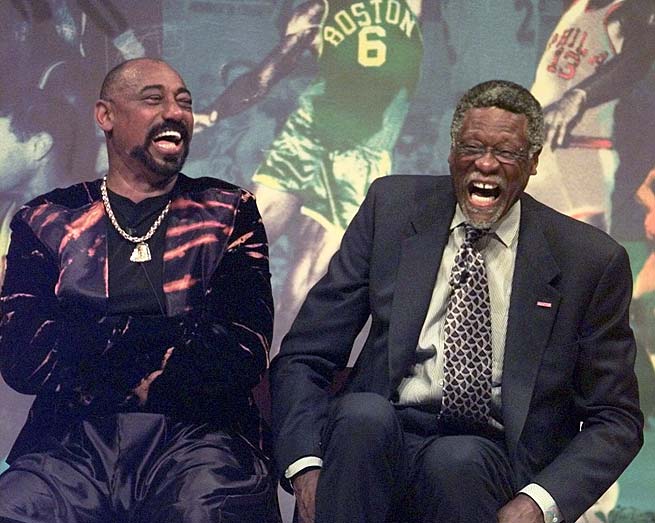
There has been a long-standing debate in basketball circles: who was the superior player, Wilt Chamberlain or Bill Russell? These two titans dominated the NBA in the 1960s, setting records, and altering the course of the league. While Russell’s Boston Celtics frequently bested Chamberlain’s teams, leading to a more decorated career in terms of championships, does that definitively prove Russell was the superior player? Perhaps not. In this blogpost, we’ll make a case for Chamberlain as the superior individual player over Russell.
Unparalleled Individual Statistics
When comparing individual statistics, Chamberlain’s numbers are nothing short of staggering. He remains the only player to average 30 points and 20 rebounds for his entire career, and his 1962 season, in which he averaged 50.4 points and 25.7 rebounds per game, is arguably the greatest single season in NBA history. He also owns the record for the most points in a single game, with an astounding 100. While Russell was no slouch on the stats sheet, Chamberlain’s numbers eclipse Russell’s in nearly every individual category.
Versatility and Adaptability
In addition to his dominant scoring and rebounding, Chamberlain was an extraordinarily versatile player. In the 1967-68 season, he led the league in assists, a testament to his all-around skills and ability to adapt to his team’s needs. Furthermore, he had an uncanny ability to stay on the court, often playing the full 48 minutes. On the defensive end, while blocks were not officially recorded during his career, anecdotal evidence and unofficial tallies suggest Chamberlain was one of the most dominant shot-blockers in history.
Dominance Over Russell in Head-to-Head Matchups
While Russell’s Celtics often came out on top in their battles with Chamberlain’s teams, the individual matchup between the two centers was a different story. Chamberlain averaged 28.7 points and 28.7 rebounds in games against Russell, both better than his career averages. This shows that when directly facing Russell, Chamberlain elevated his game, underscoring the point that team success does not necessarily correlate with individual superiority.
Impact on the Game
Chamberlain’s impact on the game of basketball extended beyond his personal achievements. His sheer dominance forced the NBA to change several rules, including widening the lane and adjusting rules on inbounding and free-throw shooting. This is a testament to the profound impact Chamberlain had on the sport.
Bill Russell was undoubtedly a phenomenal player and an exceptional leader, leading the Celtics to an unprecedented 11 championships in 13 seasons. His defensive prowess and unselfish play set the gold standard for the league. However, the case for Chamberlain as the superior individual player is compelling when considering his astounding statistical achievements, versatility, and dominance over Russell in their individual matchups.
The Chamberlain vs. Russell debate will undoubtedly continue as long as the game of basketball is played. In the end, perhaps it is enough to say that they were both exceptional players who shaped the sport in their own unique ways. Still, through this lens, the argument can indeed be made that Wilt Chamberlain was the better player.



 Christopher Finlan