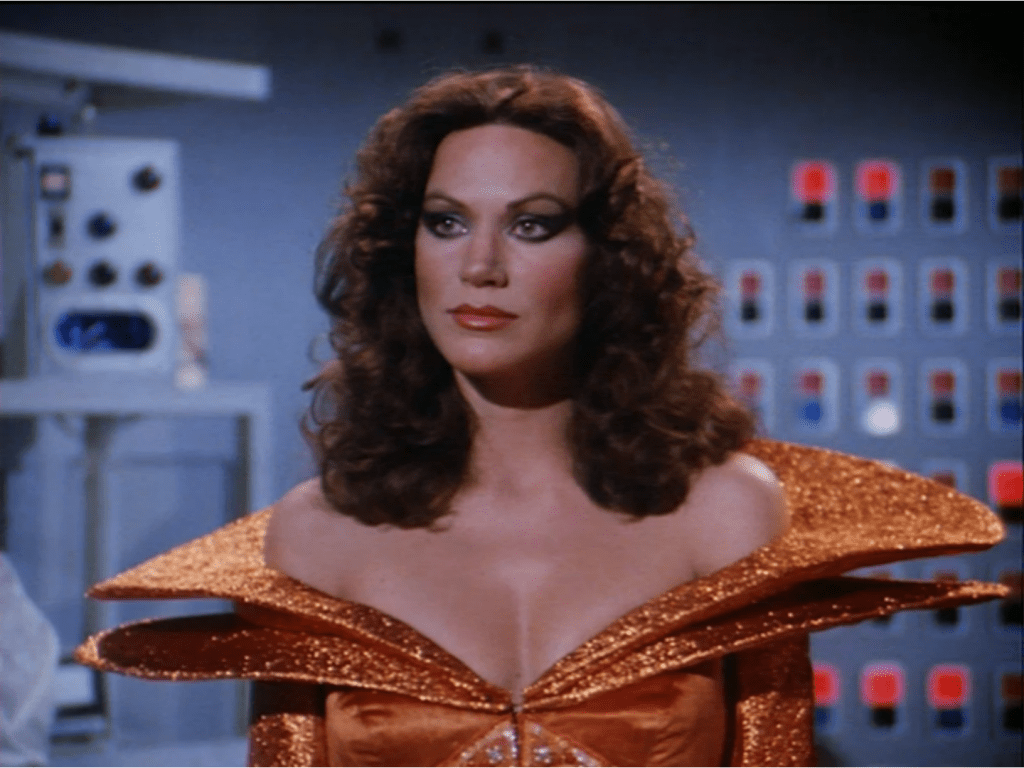
Gil Gerard, Buck Rogers, and the Kind of Grief That Shows Up in December

So long, Buck

There are celebrity deaths that feel distant in a way that’s hard to explain without sounding cold. You see the headline, you register it, you think that’s sad, and then the day keeps moving. The world has trained us to process loss at scroll-speed.

But every once in a while, one lands different. It doesn’t feel like news. It feels like someone quietly turned a key inside you and opened a door you forgot existed.

Gil Gerard died, and I wasn’t prepared for how hard it hit.

Maybe that sounds ridiculous to people who didn’t grow up with Buck Rogers in the 25th Century in their bloodstream. Maybe it sounds like nostalgia doing what nostalgia does. But this wasn’t just “an actor I liked.” This was a particular piece of childhood—one of those warm, bright anchors—suddenly becoming something you can only visit, not live alongside.

And it’s December, which makes everything heavier.

The holidays have a way of putting your life on a loop. The same music. The same lights. The same half-remembered rituals you didn’t realize you’d been collecting for decades. This time of year doesn’t just bring memories back; it drags them in by the collar and sets them down in front of you like, Look. Pay attention.

So when I saw the news, it didn’t feel like losing a celebrity.

It felt like losing a doorway.

Buck Rogers wasn’t a show I watched. It was a place I went.

Some shows are entertainment. Some are comfort. And some become the background radiation of your childhood — you don’t even remember the first time you saw them, because they feel like they were always there.

That’s what Buck Rogers was for me.

It was shiny, goofy, sincere, and somehow confident enough to be all three without apologizing. It was the future as imagined by a world that still believed the future could be fun. It had that late-70s/early-80s optimism baked into the sets and the pacing — like even the danger had a little wink in it.

And in the middle of all of that was Gil Gerard.

His Buck wasn’t “perfect hero” energy. He was cocky in a way that felt survivable. He was charming without being smug. He had that specific kind of grin that said: Yeah, this is insane — but we’re gonna be fine. As a kid, that matters more than you realize. A character like that doesn’t just entertain you; he teaches your nervous system what “okay” can feel like.

When you grow up, you start to understand why you clung to that.

Princess Ardala, obviously
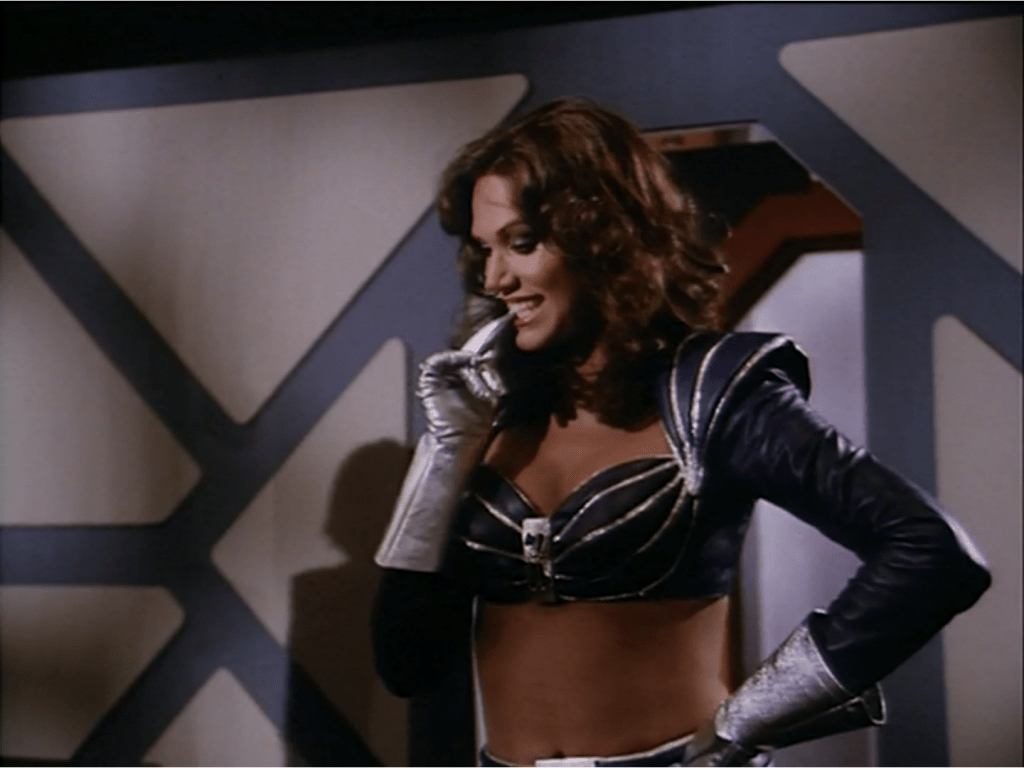
Pamela Hensley as Princess Ardala

And yes — Princess Ardala.

I’ve written about my love for her plenty, and I’m not stopping now. Ardala wasn’t just a villain. She was glamour with teeth. She was command presence and mishelpful desire and that intoxicating confidence that makes you root for someone even when you know better.

She was also part of why the show stuck in my brain the way it did. Ardala made Buck Rogers feel like it had adult electricity under the hood — like it understood that charm and danger can share the same room.

But here’s the thing I don’t think I appreciated until now: Ardala worked because Buck worked.

You need the center to make the orbit matter. You need someone steady enough to make the outrageous feel real. Gil Gerard was that steady. He didn’t overplay it. He didn’t flinch from the camp. He just stood there in the middle of it — smirking, sincere, game for the ride — and that’s what made the whole thing click.

So when he goes, it isn’t just “Buck is gone.” It’s like the whole little universe loses its gravity.

Why it hurts more in the holidays

Because December is already full of ghosts.

It’s the month where you catch yourself standing in a familiar room and realizing time has been moving faster than you’ve wanted to admit. It’s the month where you see an ornament and suddenly remember a person’s laugh. It’s the month where a song can knock the wind out of you in a grocery store aisle.

Holiday nostalgia is sneaky. It doesn’t feel like sadness until it does.

And Gil Gerard’s death—right now, right in the middle of the season that already has you looking backward—feels like a confirmation of something you spend most of the year successfully ignoring:

That childhood is not a place you can go back to. It’s a place you carry. And sometimes, someone you associated with that place disappears, and the weight of it finally shows up.

Not because you knew him.

Because you knew you, back then.

And you miss that kid more than you expected.

What I’m doing with it

I’m not trying to turn this into a big philosophical thing. I’m just being honest about the shape of the grief.

It’s not the grief of losing a family member. It’s not the grief of losing a friend. It’s its own strange category: the grief of realizing another thread connecting you to your early life has been cut.

So I’m going to do the only thing that makes sense.

I’m going to watch an episode.

Not in the “content consumption” way. In the ritual way. The way you replay something not because it’s new, but because it reminds you that you’ve been here before — you’ve felt wonder before, you’ve felt comfort before, you’ve felt the world get a little lighter for an hour before.

I’ll let the show be what it always was: a bright, weird little pocket of imagination that helped shape me.

And I’ll feel the sting of knowing that time only moves one direction.

Rest in peace, Gil Gerard.

Thanks for being a part of the version of the world where the future felt fun — and where I did, too.

This post was written with assistance from ChatGPT 5.2

The Misplaced Redemption of “Buck Rogers in the 25th Century” Season Two: The Hawk Dilemma

In the annals of science fiction television, few series have sparked as much debate and division among fans as “Buck Rogers in the 25th Century.” The transition from its first to its second season remains a particularly contentious point. With the introduction of the character Hawk, played by Thom Christopher, in the second season, a segment of the fan base contends that this addition significantly elevated the show’s quality. However, this perspective, while understandable given Hawk’s compelling characteristics and the depth he brought to the series, overlooks fundamental issues that rendered the second season a step back from its predecessor.

First and foremost, it’s essential to understand the context. The first season of “Buck Rogers” was characterized by its campy charm, a blend of action, humor, and a dash of cheeky innuendo, all wrapped up in the shiny foil of 1970s sci-fi aesthetics. It was a product of its time, embracing the era’s fascination with space opera and the optimism of interstellar exploration. The show wasn’t just about the adventures of its titular character, played by Gil Gerard, but about the world-building of the 25th century and its reflection of contemporary societal themes.

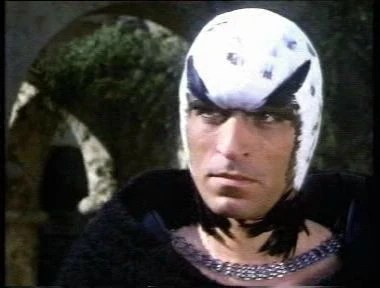
Enter the second season, and with it, a significant tonal shift. The production team, under new leadership, decided to take the series in a more “serious” direction, arguably to align more closely with the success of other sci-fi franchises of the time. This pivot meant not just a change in thematic focus but also in visual style, narrative structure, and character dynamics. It was within this tumultuous reimagining that Hawk was introduced—a noble warrior from a bird-like alien race, the last of his kind, with a tragic backstory and a quest for vengeance and justice.

Hawk was, without a doubt, a fascinating addition. His character brought a depth and gravitas to the series that was less prevalent in the first season. His internal conflict, cultural heritage, and the broader themes of genocide and survival resonated with many viewers. On the surface, Hawk’s inclusion seemed like a beacon of redemption for the series, providing a richer narrative layer that some fans argue elevated the second season above its predecessor.

However, this perspective is flawed, primarily because it isolates Hawk’s character from the broader context of the season’s failings. While Hawk was a compelling character in his own right, his presence alone could not counterbalance the numerous issues that plagued the second season. The shift towards a more “serious” tone led to an imbalance, stripping away much of the charm and fun that made the first season so endearing. The attempts at deeper storytelling often felt forced and incoherent, struggling to mesh with the established universe of the series.

Moreover, the second season suffered from a lack of consistency in its storytelling and character development. The episodic nature of the series meant that the emotional and narrative depth introduced by Hawk’s character often felt isolated from the rest of the show’s elements. The ensemble cast, one of the first season’s strengths, was sidelined, reducing the dynamic interactions that had added layers to the narrative fabric of the series.

Additionally, the drastic changes in setting—from the Earth-centric stories of the first season to the more spacefaring, episodic adventures of the second—alienated fans who had become invested in the series’ original premise and characters. The charm of New Chicago and its inhabitants was replaced by a seemingly endless parade of new planets and one-dimensional characters, making the series feel disjointed and unmoored from its roots.

In conclusion, while Hawk’s character was undeniably a highlight of “Buck Rogers in the 25th Century”‘s troubled second season, his presence alone does not redeem the myriad issues that arose from the show’s drastic retooling. The decision to shift the series’ tone and direction resulted in a loss of the unique blend of humor, action, and heart that had defined its initial success. Hawk’s inclusion, although a bright spot, could not compensate for the season’s overall decline in coherence, charm, and engagement. The debate surrounding the series’ two seasons is unlikely to be resolved among fans, but it’s crucial to recognize that a single character, no matter how well-crafted, cannot singlehandedly redeem a series from its foundational missteps.

This post was written with help from ChatGPT 4.0

Princess Ardala: The Underrated Villainess We Need to Talk About

Introduction

When it comes to iconic villains, Pamela Hensley’s portrayal of Princess Ardala on the 1979-1981 TV series “Buck Rogers in the 25th Century” is often overlooked. However, Princess Ardala is an underrated villain who deserves more recognition for her complexity, cunning, and magnetism. In this blog post, we’ll delve into the character’s most memorable moments and explore why Pamela Hensley’s performance as Princess Ardala deserves a place among the pantheon of unforgettable TV villains.

The Allure of Princess Ardala

One of the essential aspects of Princess Ardala’s character is her undeniable allure. As the seductive and powerful princess from the planet Draconia, Ardala exudes an air of confidence that is both intimidating and mesmerizing. Her elaborate and provocative costumes, combined with her flirtatious demeanor, make her a magnetic presence on-screen. Hensley’s portrayal of the character captures this allure perfectly, making it impossible to look away whenever she graces the screen.

The Complex Nature of Ardala’s Character

While many villains are one-dimensional, Princess Ardala is a multifaceted character with depth and complexity. Her character is driven by a desire for power and a determination to rule the galaxy, but she’s not without vulnerability. As the series progresses, it becomes evident that Ardala is caught between her ambition and her feelings for Buck Rogers.

Pamela Hensley masterfully portrays this inner conflict, allowing the audience to see the humanity beneath the villainous exterior. This depth of character makes Princess Ardala a much more intriguing and relatable villain than many of her counterparts.

Ardala’s Intelligence and Cunning

Princess Ardala’s intelligence and cunning are another aspect of her character that sets her apart as an underrated villain. She is always several steps ahead of her enemies, using her charm and wit to manipulate those around her. Ardala is a brilliant strategist, willing to make ruthless decisions to achieve her goals.

Hensley’s portrayal of the character emphasizes Ardala’s cunning nature, as she expertly navigates the complex world of intergalactic politics and warfare. Her ability to outsmart and outmaneuver her enemies makes her a formidable and compelling antagonist.

Memorable Moments: Ardala’s Confrontations with Buck Rogers

Throughout the series, some of the most memorable moments involve Princess Ardala’s confrontations with the show’s protagonist, Buck Rogers. Their interactions are filled with sexual tension and a battle of wits, as they each try to outsmart the other. These scenes are electric, thanks in large part to the chemistry between Pamela Hensley and Gil Gerard, who played Buck Rogers.

One such scene occurs in the episode “Escape from Wedded Bliss,” where Ardala attempts to force Buck into marrying her as part of a plan to conquer Earth. Their verbal sparring and the high-stakes tension make this episode a standout moment for both characters and showcase Hensley’s ability to command the screen.

Conclusion

Pamela Hensley’s portrayal of Princess Ardala on “Buck Rogers in the 25th Century” is an underrated gem in the world of TV villains. Her magnetic allure, complex character development, intelligence, and memorable confrontations with Buck Rogers make her an unforgettable antagonist. It’s high time we gave Princess Ardala the recognition she deserves as a captivating and multilayered villain who left a lasting impression on the sci-fi television landscape.

This blogpost was created with help from ChatGPT Pro.